


.JPG)






.JPG)
A 24 year old girl from my village died last week due to complications from eclampsia. Although she was transported via ambulance to the hospital in Boghe, then Aleg and finally to Nouakchott – the most sophisticated hospital in country – she still died along with her baby born prematurely at 5 months. As I listened to the wails of her mother which were audible for days as they rang throughout the village, I returned to thinking about culture and its intersection and influence on the health of communities and individuals.
Culture is something I have spent a lot of time observing and contemplating over the last year. Adjusting to a new culture is a day-to-day, moment-to-moment rollercoaster and as I learn more about local culture I have found myself becoming more enlightened about my personal culture which is highlighted against the backdrop of a country different in numerous ways. I do not fully understand the Mauritanian culture (and maybe never will) but I am appreciative of many of its elements and of the families who have generously provided food and shelter [free of charge] to me during my stay. Each day I continue to accept the inevitability of many Mauritanian ways although I often do not like or approve of them and have come to turns with the fact that traditions are hard to break, even those which are dangerous to the health or livelihood of one’s family.
This trend exists worldwide – take for example the fact that many Americans and Europeans smoke although research proves that smoking and chewing tobacco can increase the risk of a number of health problems including lung and throat cancer, heart disease, etc. Thus it seems information, although necessary to making an informed decision, is rarely enough by itself to produce behavior changes in people. Change takes a long time and is difficult because one is often working against social and environmental conditioning and thus the benefits of behavior change must be compelling. America is scientifically advanced with studies appearing daily that provide data to encourage healthy living and choices but people still resort back to old habits which are comfortable and often acceptable within the community, so my hopes for Mauritania are limited.
Based on my observations, the biggest health concerns in the south of Mauritania seem to be malaria, schistosimiasis, childbirth and dehydration secondary to diarrhea. Diabetes, heart disease and high blood pressure, cancer and strokes are likely problematic but are often undiagnosed prior to death due to limited health care and no preventative medicine. In America and other developed countries, many of the same problems exist but they are often caught early and treated in technologically advanced health centers leading to a significantly longer lifespan for men, women, and children. Modern medicine continues to progress but the trickle-down into the developing world is long and tedious.
Culture and tradition seem to be exceptionally strong factors in Mauritania. Take for example the acceptable practice of arranged marriages, during which women are often forced into marriage between the ages of 12 and 18 to men often 10 years their senior. The first child is usually conceived within the first year of marriage and within their lifetime women often deliver 7 to 12 children although not all survive into adulthood. Nonetheless, how do you encourage a teenage girl to wait until 19 or 20 to have sex when everyone else in her life – parents, grandparents, friends and peers – are perpetuating an unhealthy behavior. Arranged marriages at an early age are an age old tradition which obviously does not always have tragic outcomes or else the population would have disappeared years ago, so people continue with the behavior because it is expected within the community.
The fairly recent creation of health posts throughout many developing countries has lowered the rate of deaths by providing a place for treatment without having to travel hundreds of kilometers for basic treatment and by encouraging pre-natal exams and allowing women to deliver in the presence of trained health professionals and in theory with increased sanitary conditions when compared to one’s home. The rate of maternal and infant mortality is still uncomfortably high, and it has progressed significantly in the last decade, suggesting more needs to be done in all aspects of health and medicine.
Eradication of malaria is currently impracticable and a vaccination is still unavailable but malaria is often preventable with an appropriate prophylaxis and treatable with a variety of drugs, but both the prophylaxis and treatment are generally expensive for long-term use and in many affected countries hard to find. Thus, programs promoting prevention are important in many countries, including Mauritania, especially since the likelihood of contracting malaria can be significantly reduced with a few simple precautions such as limiting the exposure of skin throughout the night - wearing long sleeves and pants, using mosquito netting to cover windows and doors or sleeping under a mosquito net – or wearing neem cream – a cream made easily out of locally found materials that repels mosquitoes – after dusk. Although the use of mosquito nets has increased greatly over the last decade, little seems to be done to prevent bites from dusk until bedtime, approximately 4 hours later. This practice seems to be cultural and often the activities before bedtime include watching television, napping or generally sitting and talking in the open air – nothing that could not be performed under the protection of a net.
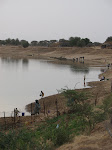
Schistosimiasis in contrast to malaria is unpreventable because life in many African villages revolves around rivers – bathing, swimming, watering plants, washing clothes and dishes- and has done so for centuries, but it is easily treated if caught early. In Mauritania, it is a common disease that leads to high morbidity rate because many people do not seek treatment before bodily damage has started. Symptoms are often ignored or are pushed aside as unimportant until major medical intervention is required.
A recent study by WHO discovered that car crashes are soon going to become the number 1 killer of children in the developing world, bypassing malaria and dysentery. Although Mauritania is a dry country that likely has a slightly lower rate of automobile crashes, it also has no laws requiring seatbelt usage (seatbelts are not even available on most cars), restraining devices for children (children always sit on the laps of parents to prevent having to buy another seat) or limiting numbers of passengers (10 people usually in a car made for 7 or 8), thus serious car accidents likely result in the death or injury of all people involved. Without governmental laws, cars will continue to be overcrowded and children sitting on laps because it is economically beneficial for the drivers. Once again, money seems to be more important than safety when bureaucracy is involved.
How do you remain culturally sensitive while encouraging a population to change deeply ingrained cultural foundations? How do you tell a midwife who began practicing before I was born that many of his/her practices are inappropriate and dangerous, when thousands of her patients have beaten the odds, and survived? How do you teach people to eat more fruits and vegetables when they are not always available or may be unaffordable? How do you encourage a family to limit the number of children they produce when society dictates a big family is necessary for adequate continued existence? These questions and more fill my head daily as I try to change perspectives while attempting to remain culturally sensitive and respect the reasons and decisions behind tradition.

Subscribe to:
Post Comments (Atom)
2 comments:
i love the new pictures, yates!
Hi Yates.
Great information! Have a great time in France. Aunt Jan
Post a Comment